
Hosted in the birthplace of Shakespeare, the Division of Occupational Psychology’s flagship conference is fast approaching, and the conference committee are working overtime to match, and exceed the quality of previous years. Our goal is to deliver more and better content and build on the steady year-on-year increase in delegate numbers that makes us the largest and most successful member network conference in the BPS.
Our theme for the DOP 2020 Annual Conference is ‘The Practice of Science: Occupational Psychologists at Work’. Pertinent to every area of occupational psychology, the theme celebrates a core characteristic of our profession that unifies academia and practice.
The strong reputation of the conference has resulted in offers to contribute and collaborate from both national and international communities united by our interests. Programming so much content into three days is a year-long challenge for the committee resulting in an extensive and growing list of reasons to attend. With this in mind, we’ve picked just nine aspects.
1. Keynotes

The DOP 2020 annual conference has assembled a selection of internationally renowned experts to provide engaging keynotes across the three days. United by both their relevance to Occupational Psychology and the overarching theme of the conference, each speaker will give thought provoking presentations in key areas of importance.
Professor Frederik Anseel – King’s College London Frederik Anseel is Professor of Organizational Behaviour and Vice Dean at King’s College London. He serves as the President of EAWOP (the European Association of Work and Organizational Psychology) and is a Fellow of the International Association of Applied Psychology. His work has been published in journals such as Journal of Applied Psychology, Journal of Management, and Psychological Science. Given that the DOP has taken on the challenge of organising the next EAWOP congress in May 2021, to be hosted in Glasgow, we look forward to welcoming this important keynote.
Professor Gillian Symon – Royal Holloway, University of London Gillian Symon is Professor of Organization Studies at Royal Holloway, University of London, and Co-Founder and Co-Director of RHUL’s interdisciplinary Digital Organisation and Society Research Centre. Gillian has been a leading voice on the best practice of qualitative methods, and has written numerous publications that have guided academics, practitioners and student alike. Gillian has used her research expertise and fostered inter-disciplinary working practices to further our understanding into important and contemporary issues facing our profession, including work-life boundaries, technical development and change in organisations.
Professor Brian Nosek – Center for Open Science Brian Nosek is co-Founder and Executive Director of the Center for Open Science that operates the OSF, a collaborative management service for registering studies and archiving and sharing research materials and data. Given how much our science has been suffering from the replication crisis and from serious deficiencies in our evidence base, this is a fascinating opportunity to hear from one of the world leaders in the Open Science movement. Brian’s session will be our first ‘Open Lecture’ and we look forward to welcoming academics across a range of disciplines.
Professor Gabriele Oettingen – New York University Gabriele Oettingen is a Professor of Psychology at New York University. She is the author of more than a 150 articles and book chapters on thinking about the future and the control of cognition, emotion, and behaviour. She received her Ph.D. from the Ludwig Maximilian University of Munich and the Max Planck Institute for Behavioral Physiology in Seewiesen, Germany. She also just happens to be a German Princess, which we assume must be a BPS first.
Professor Mark van Vugt – Vrije Universiteit Amsterdam Mark van Vugt is Professor of Evolutionary Psychology, Work and Organizational Psychology at the Vrije Universiteit Amsterdam, the Netherlands, and Director of the Amsterdam Leadership Lab (amsleadershiplab.com). He is also a Research Associate at the University of Oxford. We rarely hear enough about evolutionary factors influencing occupational psychology so Mark’s contributions will be very helpful indeed.
2. Programmed Sessions

The conference will be crammed with sessions on a breadth of topics reflecting the diversity of our industry. This variety also extends to session formats. Delegates will experience high-energy Impact papers, more focussed Standard papers, multi-presenter Symposiums, and visual Poster displays. We are also developing and expanding the Careers support stream in a range of ways and introducing joint sessions pairing academics and practitioners.
Every submission has been assessed using a rigorous double-blind two-reviewer process to ensure quality. Reviewing criteria include originality and methodological thoroughness, in addition to the submission’s contribution to both science and practice. Dozens of reviewers from academia and practice have provided their expertise to help ensure the conference is able to present the very best of Occupational Psychology. Visit our website to see the conference programme.
3. CPD Workshops

Running on Wednesday morning and Friday afternoon, these 3-hour skills-developing CPD workshops will provide an invaluable opportunity to develop your knowledge, add to your skills and potentially gain accreditation that would otherwise only be available at commercial rates. Yes, workshop places are free, but also limited, so you must sign up at the time of registration in order to attend. Check the website for available workshops and booking instructions.
4. New extended and extensive Careers Stream

Due to the popularity of the 45-minute careers session last year, we’ve increased this to a whole diverse stream running across Wednesday and Thursday. This includes speakers talking about their own, often varied, careers, information about job roles, and also development workshops that will benefit delegates at various stages of their careers. In addition, we have scheduled additional short in-programme workshops running over the three days. These will be run by national and international thought leaders and experts and will develop skills designed to give delegates an edge in their careers. For example, our Keynote Gabriele Oettingen will offer a student-focussed workshop based around her iPhone and Android App called ‘Woop’.
5. Networking and Support Programme

What was previously titled the Ambassador programme has been revamped and re-energised for 2020! Your new Networking and Support Programme (NSP) will offer real benefits, especially for those of you who are new to our events.
However, whether an experienced veteran or relative newcomer, the NSP can increase your conference enjoyment and enhance your professional network. The NSP will use information garnered from a brief questionnaire to pair delegates to ‘Conference Champions’ who can be a valuable source of information, reassurance and networking contacts. The conference will also provide several opportunities for NSP participants to meetup and engage.
What is in it for you if you become a Champion? How about the enjoyment of new contacts and the warm glow of giving something back to your society and your profession? You might even get a special badge. What’s not to like?
Getting involved in the NSP is easy! Just indicate your agreement to take part as either a Champion or Delegate when you register or drop the conference team an email (dopconf@bps.org.uk). Visit the website for more details.
6. DOP Awards Dinner

Keeping abreast of the valuable contributions made by psychologists in our industry is no easy task. Luckily the DOP Awards Committee is here to help!
Adjudicated by a panel of expert judges, winners from nine categories will be announced and receive their prizes during Thursday night’s Awards Dinner. This glitzy event will involve plenty of food and drink and conclude with a live band.
Presentation slots have also been allocated to 2019 and 2020 award winners, providing delegates with the chance to experience the work of DOP award-winning presenters first-hand.
7. Location, Location, Location
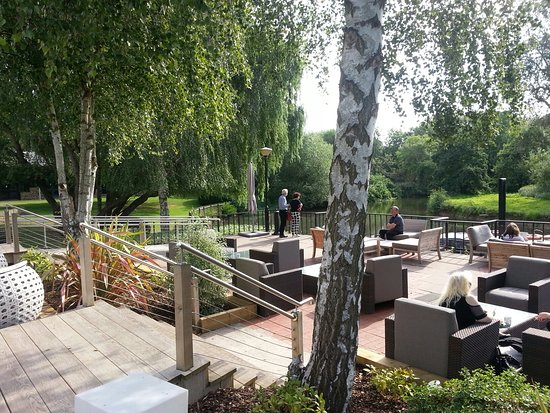
After receiving very positive ratings from our post-conference feedback, we have decided to return to the highly popular venue that hosted us in 2018. Situated in the heart of Shakespeare country, the Crowne Plaza will provide a welcoming atmosphere that is just a short walk from the historic town of Stratford Upon Avon. Should you be able to come along in time for Tuesday afternoon or evening, we will be arranging a guided tour of Shakespeare’s town by a local actor. Following this, you can enjoy Psychology-in-the-Pub with a highly interactive format.
8. Networking Dinner
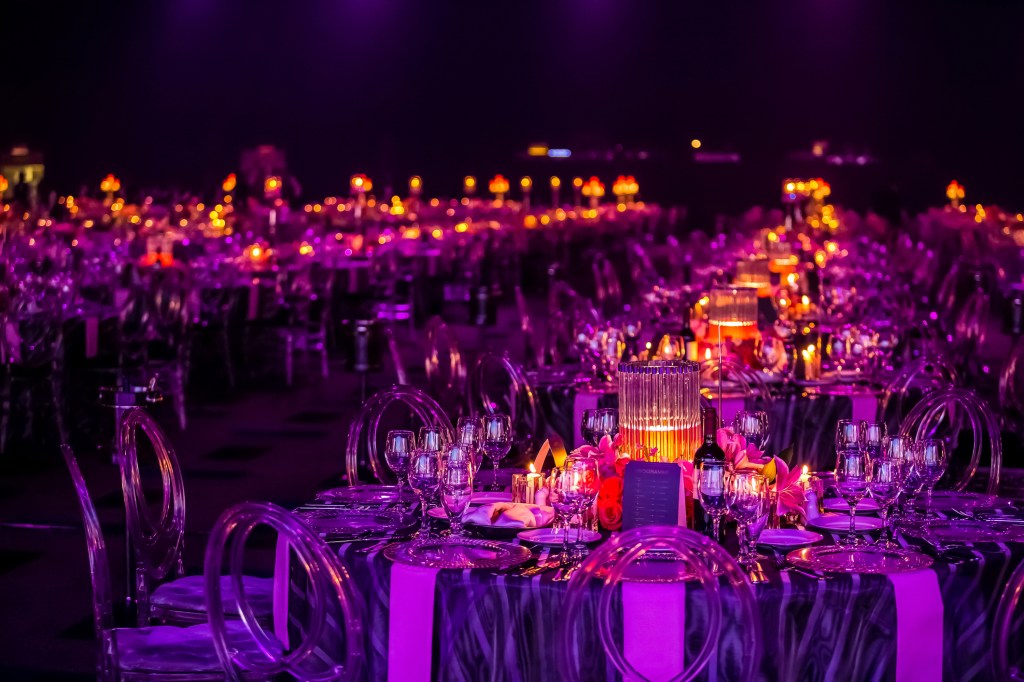
Be it touching base with an old friend or building bridges with new contacts, Wednesday night’s Networking Dinner will provide you with food and drink in a relaxed and friendly setting. We have been lucky to secure a very entertaining and informative after-dinner talk from Matthew Syed who when not writing books and running a very successful consultancy also contributes to The Times on leadership and on performance in sport.
9. Posters

Striking a balance between informative and visually striking, posters offer presenters a distinctive format to communicate their research. The A0-sized posters are visible for the entirety of the three days, enabling delegates to peruse the displays at multiple points during the conference. There will also be a more formal Poster Viewing session during Thursday lunchtime, where presenters will be able to receive questions from delegates.
Each poster presenter also gets the chance to speak for one minute about their research in the pulsating Poster Snapshot session immediately following Thursday morning’s Keynote. Prizes for the best posters will be judged by a panel that includes BPS President Elect Dr Hazel McLaughlin, with winners receiving their prizes at the Awards Dinner.
The reasons to attend are too numerous to do justice here, so we’ll be posting frequent updates on social media over the coming weeks. Follow our DOP ‘company’ and group pages on LinkedIn, along with the hashtag #dopconf on twitter to avoid missing out. Given its impending hiatus in 2021 to make way for EAWOP, the DOP 2020 Annual Conference will be an unmissable highlight of 2020! We look forward to meeting up with conference regulars, returners and newcomers to the warm, friendly and engaging event that is our annual conference.

About the Authors
Dr Simon Toms is Co-Chair of the DOP Conference Committee and Principal Research Psychologist at Psychological Consultancy Ltd
Dr Ian Bushnell is Co-Chair of the DOP Conference Committee, former Chair of the DOP, and Senior Lecturer at the University of Glasgow




 Psychology at Work